Items filtered by date: August 2024
Danger of Achilles Tendon Rupture

The Achilles tendon, located at the back of the ankle, connects the calf muscles to the heel bone. It plays an important role in walking, running, and jumping, bearing the brunt of physical activity. The tendon has a relatively poor blood supply, making it more susceptible to injury and slower to heal. An Achilles tendon rupture occurs when the tendon tears, often during sudden, forceful movements like jumping or sprinting. This injury is most common in men aged 30 to 50, especially those who engage in intense physical activity without adequate warm-up. Symptoms include a sudden, sharp pain in the back of the ankle, often accompanied by a popping sound, followed by difficulty walking. While similar pain might be due to conditions like bursitis, a rupture is more serious. If untreated, it can lead to long-term disability. Diagnosis typically involves a physical exam and imaging tests. Treatment options range from immobilization with a cast to surgical repair, depending on the severity of the rupture. If you have sustained a painful injury to your Achilles tendon, it is strongly suggested that you visit a podiatrist as quickly as possible for a proper diagnosis and appropriate treatment methods.
Achilles tendon injuries need immediate attention to avoid future complications. If you have any concerns, contact one of our podiatrists of Ankle and Foot Centers of Missouri, P.C.. Our doctors can provide the care you need to keep you pain-free and on your feet.
What Is the Achilles Tendon?
The Achilles tendon is a tendon that connects the lower leg muscles and calf to the heel of the foot. It is the strongest tendon in the human body and is essential for making movement possible. Because this tendon is such an integral part of the body, any injuries to it can create immense difficulties and should immediately be presented to a doctor.
What Are the Symptoms of an Achilles Tendon Injury?
There are various types of injuries that can affect the Achilles tendon. The two most common injuries are Achilles tendinitis and ruptures of the tendon.
Achilles Tendinitis Symptoms
- Inflammation
- Dull to severe pain
- Increased blood flow to the tendon
- Thickening of the tendon
Rupture Symptoms
- Extreme pain and swelling in the foot
- Total immobility
Treatment and Prevention
Achilles tendon injuries are diagnosed by a thorough physical evaluation, which can include an MRI. Treatment involves rest, physical therapy, and in some cases, surgery. However, various preventative measures can be taken to avoid these injuries, such as:
- Thorough stretching of the tendon before and after exercise
- Strengthening exercises like calf raises, squats, leg curls, leg extensions, leg raises, lunges, and leg presses
If you have any questions please feel free to contact our offices located in the Greater Kansas City area . We offer the newest diagnostic tools and technology to treat your foot and ankle needs.
Arthritis Can Cause Pain in the Feet and Ankles

If you are suffering from tenderness, pain, or stiffness in the joints of your feet or ankles, call us to schedule an appointment.
Are Your Shoes Right for You?

There are a lot of issues and injuries that can impact the foot, therefore it is important to make sure that you are wearing shoes that fit correctly. Shoes should be comfortable and supportive while also cushioning the foot. One way to ensure this is to purchase shoes that are specifically made for the physical activity you are doing. Another thing that can be done to ensure that shoes fit correctly is by purchasing them at the end of the day. This is because that is when your feet are the largest. The toes should be able to comfortably wiggle in the shoes, and the heel should comfortably be gripped. If you have questions about making sure you’re wearing the right shoes, it is suggested you consult with a podiatrist.
Getting the right shoe size is an important part of proper foot health. Seek the assistance of one of our podiatrists from Ankle and Foot Centers of Missouri, P.C.. Our doctors will provide the care you need to keep you pain-free and on your feet.
Getting the Right Shoe Size
There are many people who wear shoes that are the incorrect size, negatively affecting their feet and posture. Selecting the right shoes is not a difficult process, so long as you keep several things in mind when it comes to choosing the right pair.
- When visiting the shoe store, use the tools available to measure your foot.
- Be sure there is ‘wiggle room’. There should be about an inch between your toes and the tip of your shoes.
- Do not always assume you are the same size, as manufacturers run differently.
- Purchase shoes later in the day, as your feet swell as the day progresses.
- If a shoe is not comfortable, it is not suitable. Most shoes can’t be ‘broken in’, and comfort should be the ultimate goal when it comes to choosing the right pair of shoes
As our feet hold our body weight and keep us moving, it is important to treat them right. Picking the right pair of shoes can provide your feet comfort and mobility without pain.
If you have any questions, please feel free to contact our offices located in the Greater Kansas City area . We offer the newest diagnostic and treatment technologies for all your foot care needs.
Facts About Acquired Flat Feet
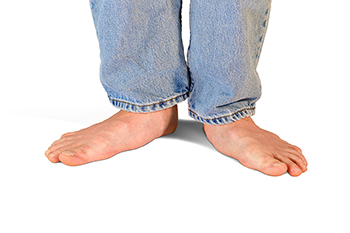
Adult-acquired flatfoot deformity can lead to dysfunction of the posterior tibial tendon, often affecting individuals later in life. Adult-acquired flatfoot can also arise from untreated injuries or inflammatory conditions. Typically, symptoms begin in an individual’s 50s and 60s. The posterior tibial tendon, which is essential for stabilizing the medial arch, can degenerate over time. This in turn reduces its ability to support the foot and causes pain. As this tendon weakens, other structures in the foot may also deteriorate, leading to further deformity. In their advanced stages, these deformities can become rigid, making treatment more challenging. Studies using weight-bearing CT scans indicate that individuals with adult-acquired flatfoot deformity may have a tendency towards hindfoot collapse, worsening the condition. If you have flat feet that are causing pain, it is suggested that you schedule an appointment with a podiatrist for an exam, diagnosis, and treatment.
Flatfoot is a condition many people suffer from. If you have flat feet, contact one of our podiatrists from Ankle and Foot Centers of Missouri, P.C.. Our doctors will treat your foot and ankle needs.
What Are Flat Feet?
Flatfoot is a condition in which the arch of the foot is depressed and the sole of the foot is almost completely in contact with the ground. About 20-30% of the population generally has flat feet because their arches never formed during growth.
Conditions & Problems:
Having flat feet makes it difficult to run or walk because of the stress placed on the ankles.
Alignment – The general alignment of your legs can be disrupted, because the ankles move inward which can cause major discomfort.
Knees – If you have complications with your knees, flat feet can be a contributor to arthritis in that area.
Symptoms
- Pain around the heel or arch area
- Trouble standing on the tip toe
- Swelling around the inside of the ankle
- Flat look to one or both feet
- Having your shoes feel uneven when worn
Treatment
If you are experiencing pain and stress on the foot you may weaken the posterior tibial tendon, which runs around the inside of the ankle.
If you have any questions please feel free to contact our offices located in the Greater Kansas City area . We offer the newest diagnostic and treatment technologies for all your foot and ankle needs.
Turf Toe Injuries Common in Athletes

Turf toe, or a metatarsophalangeal, MTP, joint sprain, is a common injury affecting athletes, particularly those playing on artificial turf. This injury occurs when the big toe is hyperextended as the heel lifts off the ground, causing the soft tissues and ligaments in the MTP joint to stretch or tear. Athletes who make sudden movements or push off their toes into sprints are especially vulnerable. Turf toe can vary in severity, from mild where tissues are stretched, to severe where tissues are completely torn and the joint may be dislocated. Symptoms can include pain, swelling, bruising, limited range of motion, and sometimes a loose or unstable joint. A podiatrist can diagnose and treat turf toe effectively through imaging tests, like X-rays or MRI scans, and create a treatment plan. This includes medication, custom orthotics, or in rare cases, surgery. Timely consultation with a podiatrist ensures proper healing and helps athletes return to their sport. If you are experiencing pain in the big toe joint, it is suggested that you schedule an appointment with a podiatrist for an exam, diagnosis, and treatment options.
Toe pain can disrupt your daily activities. If you have any concerns, contact one of our podiatrists of Ankle and Foot Centers of Missouri, P.C.. Our doctors can provide the care you need to keep you pain-free and on your feet.
What Causes Toe Pain?
Most severe toe pain is caused due to a sports injury, trauma from dropping something heavy on the toe, or bumping into something rigid. Other problems can develop over time for various reasons.
Toe pain can be caused by one or more ailments. The most common include:
- Trauma
- Sports injury
- Wearing shoes that are too tight
- Arthritis
- Gout
- Corns and calluses
- Hammertoe
- Bunions
- Blisters
- Ingrown toenails
- Sprains
- Fractures (broken bones)
- Dislocations
When to See a Podiatrist
- Severe pain
- Persistent pain that lasts more than a week
- Signs of infection
- Continued swelling
- Pain that prevents walking
Diagnosis
In many cases the cause of toe pain is obvious, but in others, a podiatrist may want to use more advanced methods to determine the problem. These can range from simple visual inspections and sensation tests to X-rays and MRI scans. Prior medical history, family medical history, and any recent physical traumatic events will all be taken into consideration for a proper diagnosis.
Treatment
Treatments for toe pain and injuries vary and may include shoe inserts, padding, taping, medicines, injections, and in some cases, surgery. If you believe that you have broken a toe, please see a podiatrist as soon as possible.
If you have any questions please feel free to contact our offices located in the Greater Kansas City area . We offer the newest diagnostic tools and technology to treat your foot and ankle needs.
